Waiter robots to move trays without removing hospitality from service
This distributor page helps decide which robot best fits your dining room according to width, tray count, order volume, pickup method and the level of customer interaction you want to provide.
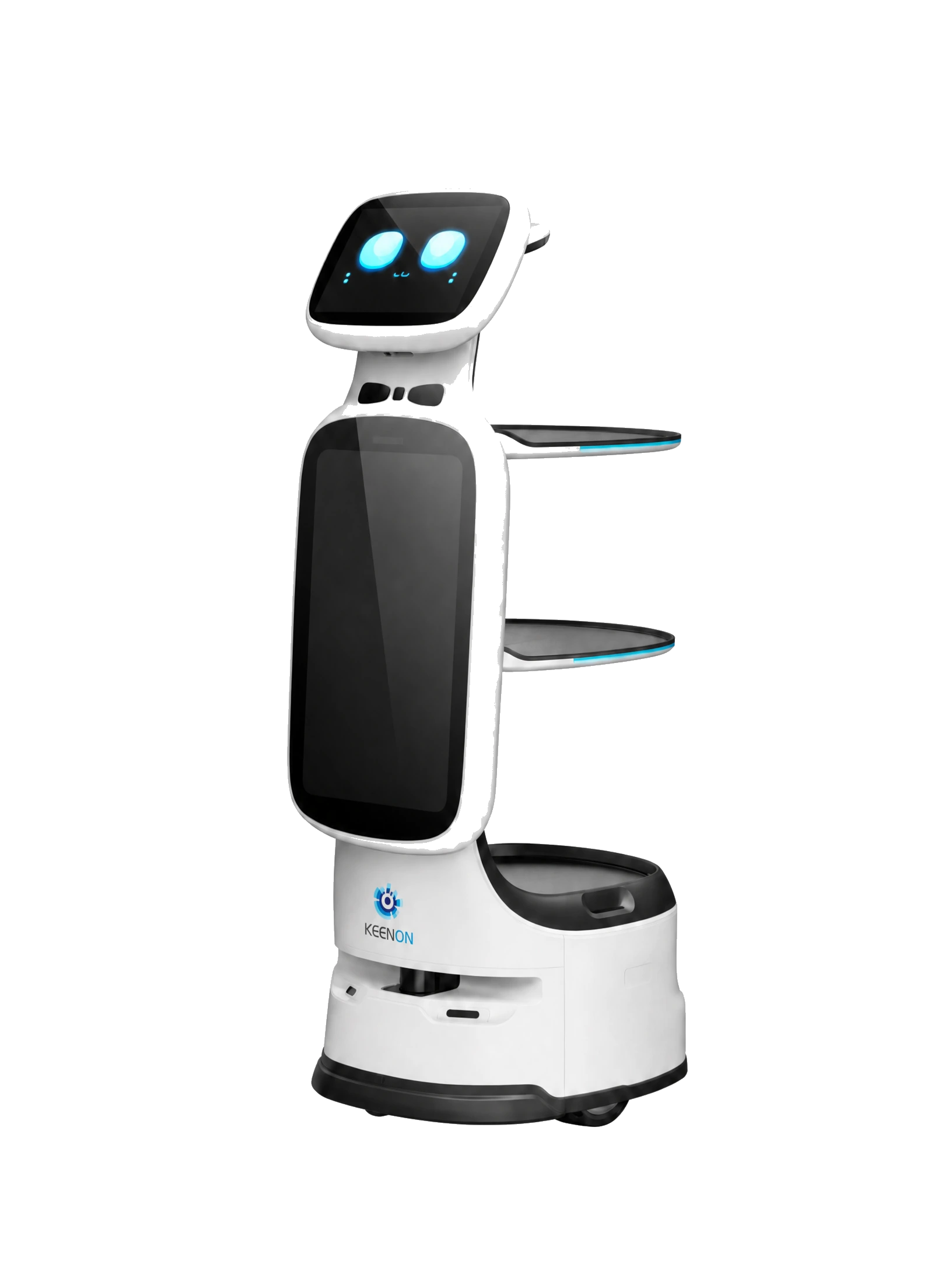
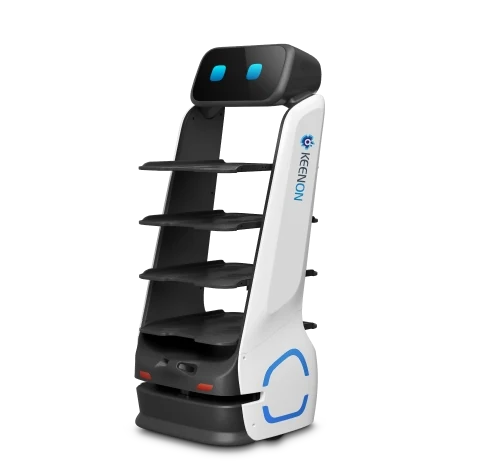
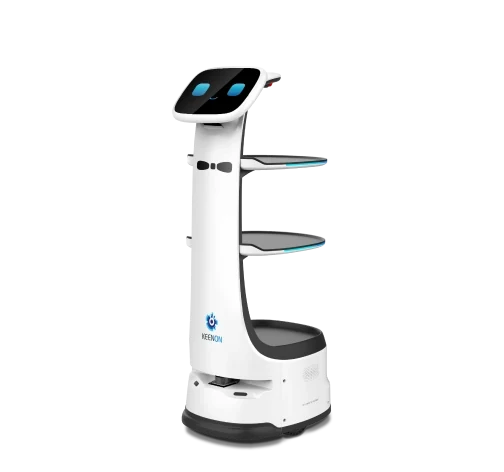
T8 prioritises manoeuvrability, T9 capacity and autonomy, T10 balanced tray service and T11 interaction/promotion in environments where the robot's presence is part of the experience.
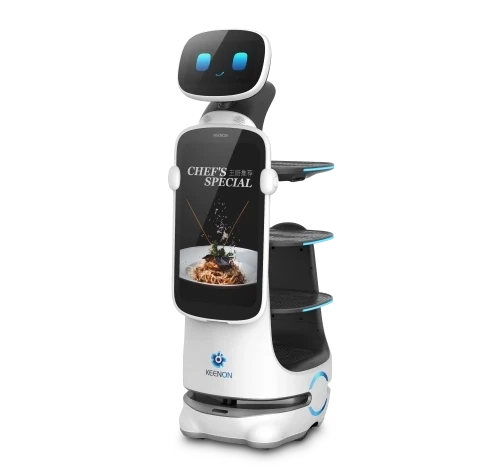
T11
Keenon T11
Robot focused on interaction, promotion and visible support in dining rooms or points of sale when experience also matters.
Best fit: Events, promotions, buffets, large surfaces and environments where robot presence attracts attention.
We analyse pickup points, tables, turning radius, real width between chairs, peak moments, load per service, waiting areas and interaction protocols with staff and customers. Then we choose the model that introduces the least friction into the room.
Automate tray routes without automating customer relationships
The robot should handle repetitive movements between kitchen, dining room, buffet or delivery point. The human team keeps greeting, recommendation, sales and incident resolution.
Sectors where this family fits
See how these robots work in real environments, sector by sector.
It depends on the model. The Keenon T8 works with a minimum passage of 55 cm and the T11 is designed for even narrower aisles. Before recommending a model we measure your real aisle width, turning areas and table layout.
No. The robot takes over repetitive tray routes between kitchen, dining room and collection. Your team keeps greeting, recommending, selling and looking after customers, which is where it adds most value.
Deployment happens with the venue in operation. We first analyse routes, service peaks and the charging point, then configure the robot with an operating plan adapted to your dining room.