Constant internal routes
Supplies, linen, samples, consumables and support materials travel through corridors and floors in repeated patterns throughout the day.
Clinical and support staff accumulate journeys to move medication, consumables, samples, linen, trays, waste or support materials. When those movements repeat every day, they consume operational energy and increase dependence on low-clinical-value manual tasks.
Supplies, linen, samples, consumables and support materials travel through corridors and floors in repeated patterns throughout the day.
Every non-care journey competes with higher-value tasks, especially during high-pressure staffing shifts.
Corridors, entrances, waiting rooms and high-traffic areas need consistent cleaning beyond occasional manual intervention.
Robotic circulation must respect protocols, patients, visitors, lifts, restricted zones and safety procedures.
Healthcare automation must be prudent: it does not replace clinical protocols, but helps structure routes, reduce repetitive load and improve logistics support availability.
These are the most common robotic solutions for hospitals, senior living facilities, clinics, laboratories and healthcare support centres.
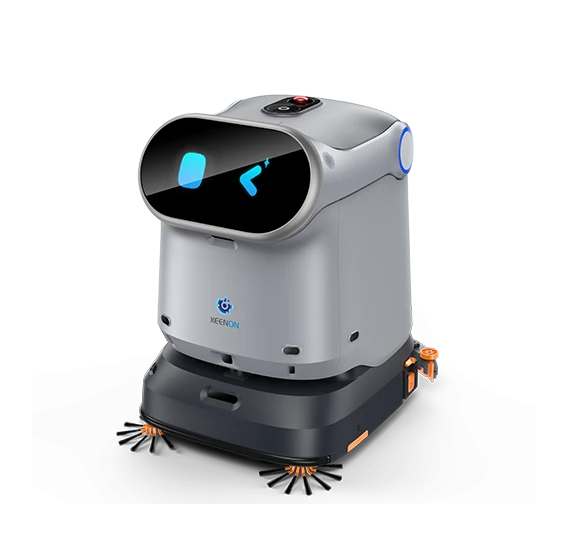
Helps maintain corridors, waiting rooms and common areas with more consistent and measurable cleaning programmes.
Four-in-one cleaning and separated clean and dirty water add operational control on heavily used indoor surfaces.
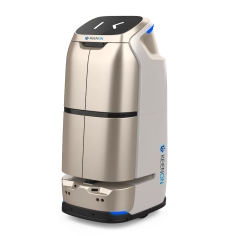
View C40Useful for transporting supplies, small orders, non-critical medication or auxiliary material between defined points.
Closed compartments help separate deliveries and manage distribution routes with more order.
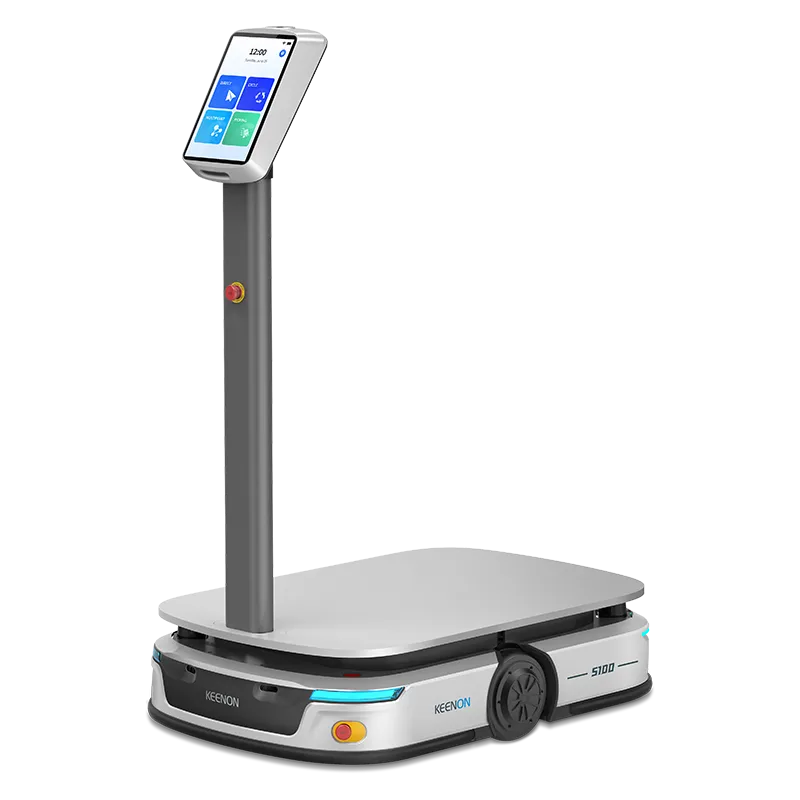
View W3Designed to move heavier material on predictable indoor routes, warehouses, laboratories or hospital support areas.
Its capacity of up to 100 kg helps release staff from repetitive pushing and heavier transfers.
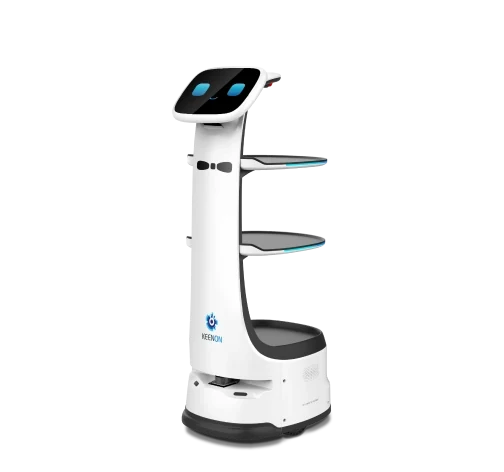
View S100Can fit nursing stations, storage rooms, senior living areas or narrow corridors where trays or light consumables move.
Its compact format supports simple routes where available space is more limited.
View T8A healthcare robot must coexist with vulnerable people, active corridors and sensitive processes. The decision is therefore not only about specifications, but about operational safety, traceability, cleaning and team acceptance.
We define where the robot may circulate, at which times and with which operational exceptions.
We separate light, closed, heavy, clean or sensitive loads to avoid mixing incompatible use cases.
We design alternative manual procedures, responsibilities and usage limits.
Training reduces friction and explains how the robot complements staff rather than replacing them.
We review cleaning, internal logistics, closed transport and heavier loads with you to propose a useful and safe deployment.
Consultative diagnosis for hospitals, senior living facilities, clinics and laboratories.