Repetitive routes
Trays, dishes, drinks and collection move along the same routes throughout service, especially between kitchen, bar and dining room.
In restaurants, valuable minutes disappear through repeated walking between kitchen, bar, dining room, terrace, back-of-house and cleaning areas. At peak hours, that invisible movement affects speed, guest experience and staff stability.
Trays, dishes, drinks and collection move along the same routes throughout service, especially between kitchen, bar and dining room.
When the kitchen accelerates, bottlenecks often appear in delivery, collection or coordination of auxiliary tasks.
Floors, spills and waste require constant response without interrupting guest attention or increasing staff pressure.
The solution must move safely, coexist with people and respect aisles, turns, indoor terraces and tight areas.
Restaurant automation works when it is built around the real service flow: what moves, from where, to where and at which moments the operation becomes congested.
These are the most common robotic solutions for restaurants, cafés, hotel breakfast areas, corporate cafeterias and food service groups.
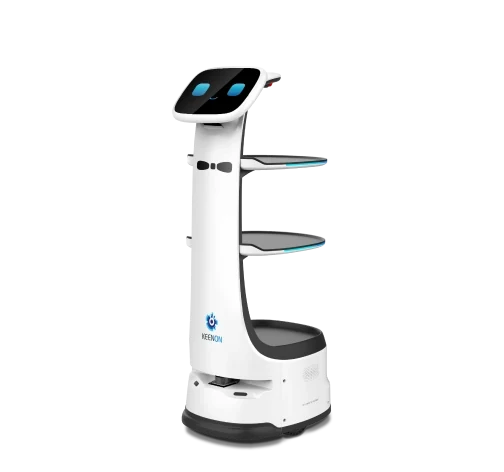
Fits narrow dining rooms, cafés and restaurants where space is limited but tray routes repeat constantly.
Its compact format and guided self-pickup help move orders and collections without taking more space than needed.
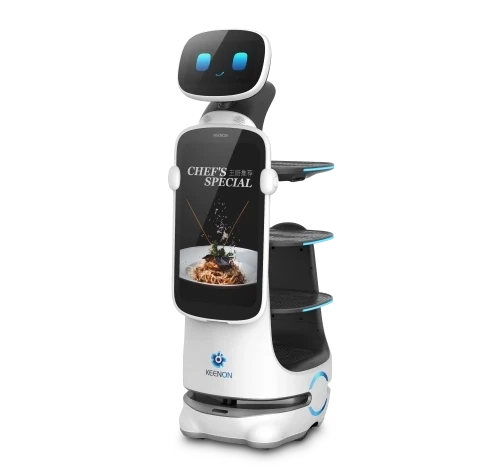
View T8Suitable for higher-volume restaurants, hotel breakfasts, corporate cafeterias and operations with several delivery points.
It helps release the team from tray journeys so they can focus on guest attention and service control.
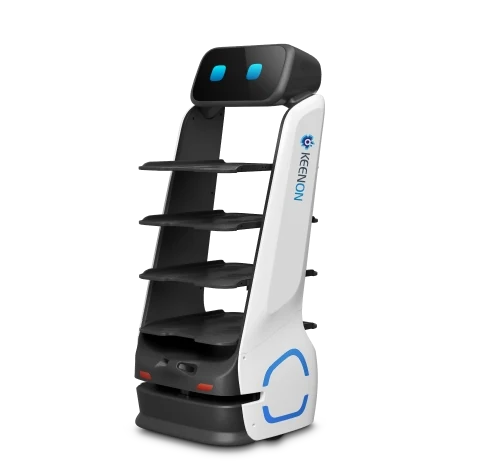
View T10Designed for long shifts and operations that need greater continuity in the dining room without constant pauses.
Its capacity and autonomy are useful when the priority is maintaining a broad repetitive service window.
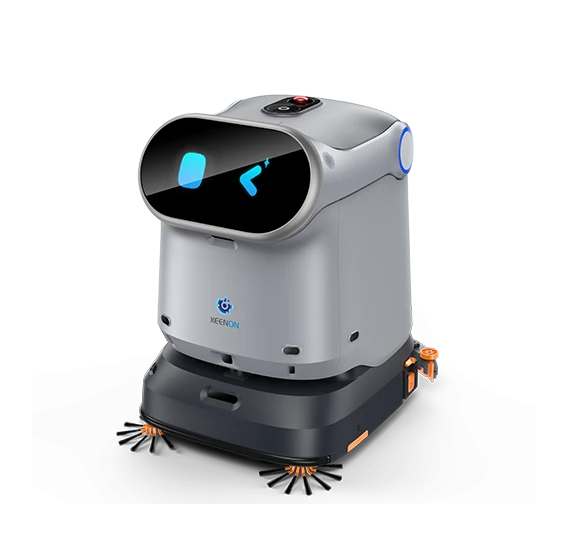
View T9Helps maintain hard floors, corridors, entrances and high-traffic areas with scheduled cleaning and response to recurring dirt.
Four-in-one cleaning and separated clean and dirty water support more consistent operational hygiene.
View C40The goal is not to turn the restaurant into a technology demo. The goal is for staff to walk less, orders to move more consistently and service standards to hold when volume rises.
We measure distances, minimum passage widths, turns and the points where staff lose the most time walking.
We separate breakfast, lunch, dinner, terrace, buffet and events so the robot is not forced into one use case.
Deployment includes clear roles: who loads, who collects, when it is used and when it is not.
You can start with one specific route and expand if the team adopts the solution well.
Tell us how your service works and we will review whether a tray robot, compact robot, autonomous cleaning or gradual combination makes sense.
Consultative diagnosis for restaurants, cafés and food service groups.