Accumulated distance
Staff spend time on internal journeys repeated between warehouse, sales floor, docks, aisles, technical areas or delivery points.
In large spaces, productivity is lost in journeys that seem small but repeat many times a day. Floor cleaning, material movement, click & collect support and internal replenishment need continuity without adding more physical load to the team.
Staff spend time on internal journeys repeated between warehouse, sales floor, docks, aisles, technical areas or delivery points.
Extensive floors need frequency, consistency and coverage without depending only on manual interventions.
Materials, boxes, consumables and small orders move along predictable routes that can be partially absorbed by robotics.
The solution must coexist with customers, workers, carts, pallet trucks, technical zones and changing density throughout the day.
Automation creates value when it is applied to stable routes, measurable surfaces and repetitive tasks that consume operational staff availability.
These are the most common robotic solutions for large retail sites, shopping centres, supermarkets, warehouses, light factories and facility management operations.
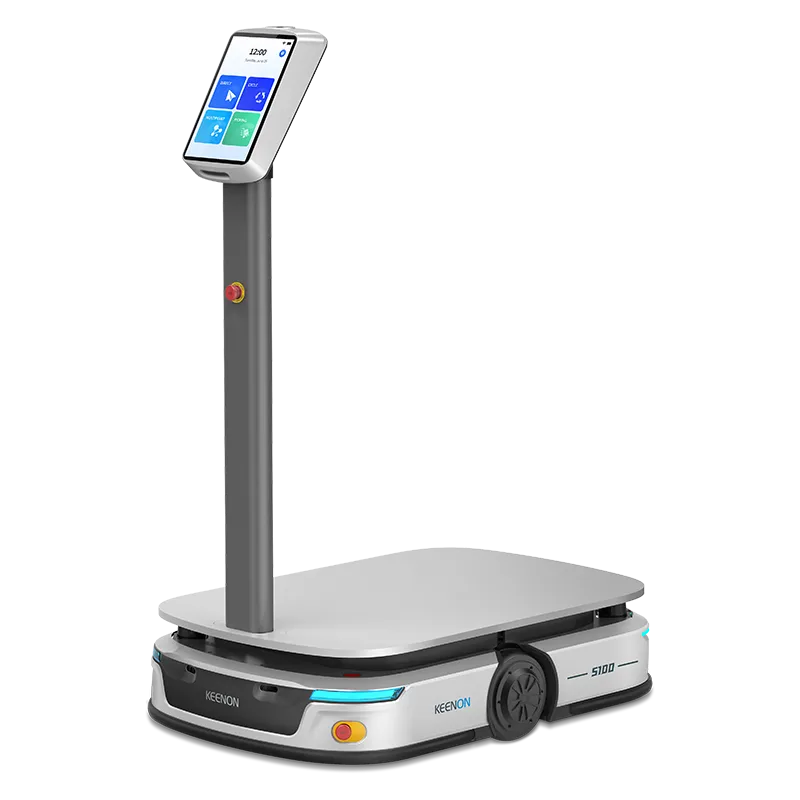
Suitable for moving materials, consumables or medium loads in warehouses, technical areas, laboratories and light industry.
It helps reduce pushing, repetitive transfers and dependence on manual indoor routes across large spaces.
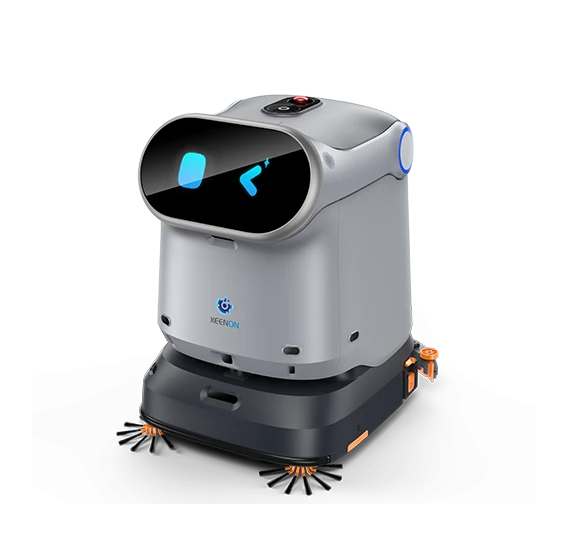
View S100Fits retail, shopping centres, corridors, halls, common areas and high-traffic indoor floors.
Scheduled cleaning helps sustain hygiene standards and free facility management staff time.
View C40Can support click & collect, internal deliveries, small spare parts or routes between warehouse and service areas.
Closed compartments help separate deliveries and coordinate several destinations in one operation.
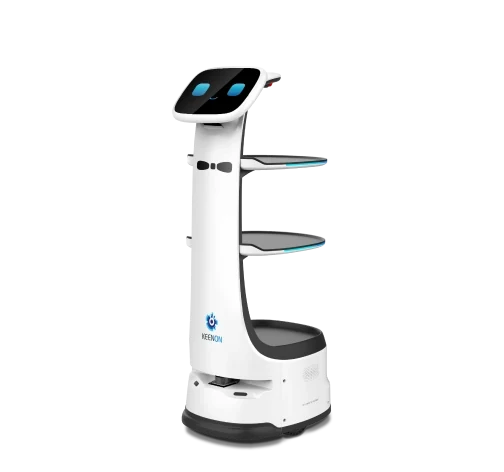
View W3Useful for samples, small materials, consumables or support in more congested zones where a compact format is needed.
Its size supports short repetitive routes in areas where a larger robot may not always fit.
View T8In large facilities, the robot must remain useful even when the environment changes: customers, carts, pallets, cleaning teams, maintenance and replenishment share routes. That is why deployment is designed by zone, schedule and use case.
We divide the facility by area type, people density, floor condition and operational priority.
Moving 5 kg is not the same as moving 100 kg; the robot is defined by the real route and effort.
We align cleaning and logistics with opening, closing, replenishment, lower traffic and internal shifts.
Deployment can grow by zone if the first routes show usefulness and adoption.
We analyse cleaning, internal transport, replenishment, facility management and logistics support to design a realistic deployment.
Consultative diagnosis for retail, shopping centres, light industry and large facilities.